
Last updated: October 3, 2026.
Heated Jacket Guide is reader-supported. As an Amazon Associate we earn from qualifying purchases. When you buy through links on this page, we may earn a commission at no extra cost to you. Prices below were checked on September 24, 2026 and move with the season, so confirm the current price before you buy.
Picture a January morning on an unheated job site. The thermometer reads in the teens, the wind finds every gap in your coat, and your fingers go numb before the first break. That is the morning that decides whether a heated jacket earns its price.
THE JOB-SITE BENCHMARK
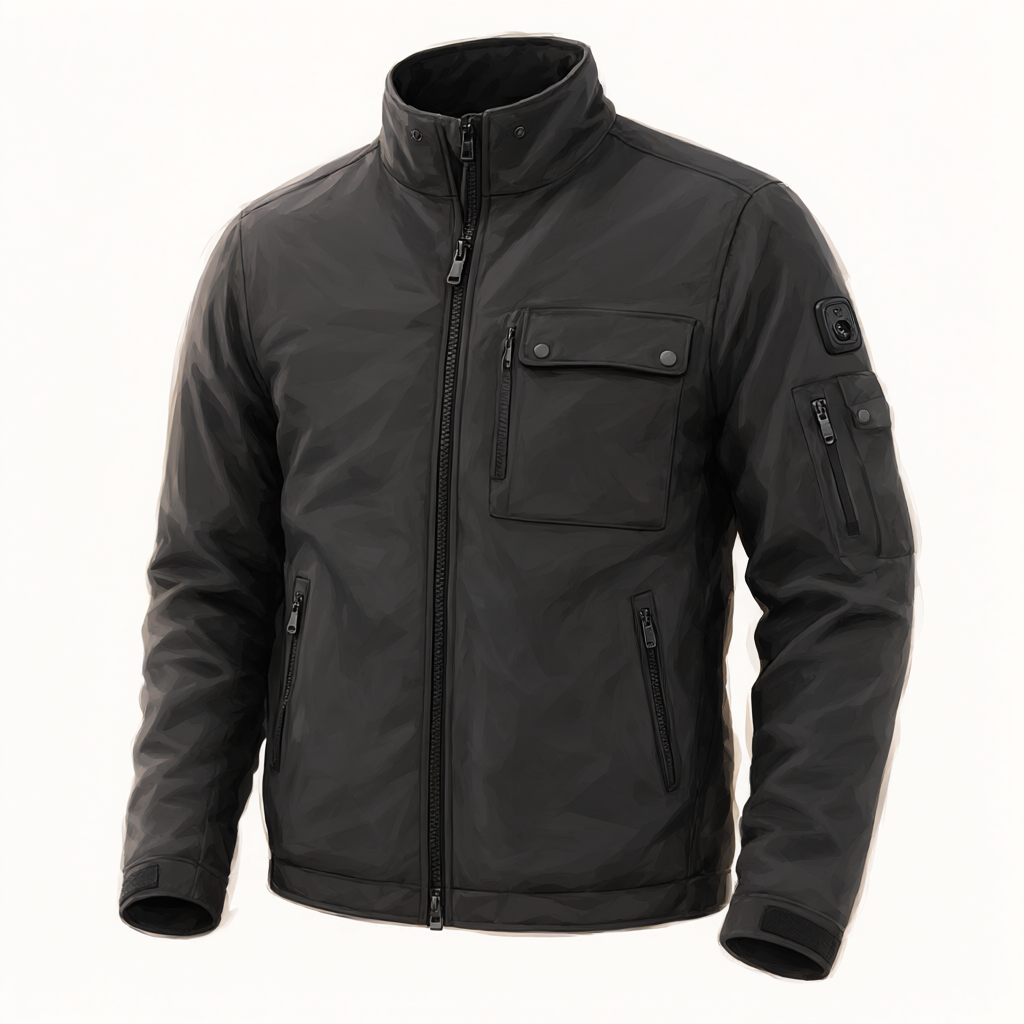
Milwaukee M12 Heated TOUGHSHELL Jacket
- Milwaukee built its heated line around one idea: the batteries you already own for your drill should also heat your jacket.
- The current TOUGHSHELL model (sold as the M100G-21 kit or the M100G-20 jacket-only) runs on M12 REDLITHIUM packs and uses what Milwaukee calls HEXON HEAT TECHNOLOGY, with 3X more insulation paired to the heating system to maximize heat retention.
Heated Jacket Guide is reader-supported. When you buy through links on our site, we may earn an affiliate commission at no extra cost to you.
Heated work jackets run thin heating wires off the same rechargeable batteries that power cordless tools, warming the core zones your body loses heat from fastest. The two biggest tool brands both built their jackets around the battery platforms their owners already carry, which makes the choice less about the jacket and more about the garage.
Keep reading for the head-to-head that settles which system deserves your money.
The short answer: buy the Milwaukee M12 Heated TOUGHSHELL Jacket if you are starting from scratch or already own M12 tools, with a claimed 12-hour runtime on low, washer and dryer safe construction, and the lowest kit price we found. Buy the DEWALT DCHJ060C1 Heated Jacket Kit if your garage already runs on 20V MAX, since it ships with a battery, charger, and USB power source in the box and adds a heated collar zone Milwaukee does not have. The real decision here is not the jacket. It is the battery platform you already own.
This is a research-based comparison: we did not personally test either jacket, and every factual claim below is cited to the source it came from. Runtime figures are the manufacturers’ claims, not lab results, and owner experiences vary.
Quick Comparison
| Spec | Milwaukee M12 Heated TOUGHSHELL Jacket | DEWALT DCHJ060C1 Heated Jacket Kit |
|---|---|---|
| Power platform | M12 REDLITHIUM (12V) | 20V MAX / 12V MAX |
| Heat zones | 3: chest, back, front pockets | 4: left and right chest, mid-back, collar |
| Heat settings | 3 (high, medium, low) | 3 (high, medium, low) plus pre-heat |
| Claimed runtime on low | Up to 12 hours (3.0Ah battery) | Up to 7.5 hours (compact 20V MAX battery) |
| Battery in the box | Kit version only | Yes: battery, charger, USB power source |
| Washable | Washer and dryer safe | Not specified by the manufacturer |
| Warranty | 1 year on heated gear | 1 year on jacket, 3 years on USB charger/power source |
| Price checked 2026-09-24 | $174.99 jacket-only, $199 kit with 3.0Ah battery | $260.99 kit at a stocking retailer |
| Buy | Check Price on Amazon | Check Price on Amazon |
If you want the wider market before you commit to a tool brand, our best heated jackets of 2026 roundup ranks both of these against the full category, and best heated jackets for work covers the job-site end in more depth.
How We Compared These Two Jackets
We compared the two jackets the way a buyer would. We pulled the manufacturers’ published specs, current retailer listings, and warranty documents, and checked claimed runtimes, heat zones, kit contents, wash ratings, and prices against each other. We did not accept free products, and no brand paid for placement. We did not personally test either jacket, and runtime figures below are the manufacturers’ claims, not lab results. Owner experiences vary, and where the specs leave a question open, we say so.
Milwaukee M12 Heated TOUGHSHELL Jacket: The Job-Site Benchmark
Milwaukee built its heated line around one idea: the batteries you already own for your drill should also heat your jacket. The current TOUGHSHELL model (sold as the M100G-21 kit or the M100G-20 jacket-only) runs on M12 REDLITHIUM packs and uses what Milwaukee calls HEXON HEAT TECHNOLOGY, with 3X more insulation paired to the heating system to maximize heat retention.
The heat layout covers three zones, the chest, the back, and the front pockets, with three heat settings and independent zone control that lets you run the core, the pockets, or both. The standout spec is runtime: Milwaukee claims up to 12 hours on low, 6 on medium, and 3 on high with a 3.0Ah battery. It also advertises a Quick-Heat function that warms up to 3 times faster than its previous models.
The shell is 100 percent stretch polyester TOUGHSHELL fabric with a DWR finish, rated wind and water resistant, and Milwaukee lists the jacket as washer and dryer safe, which matters because heated workwear gets dirty. A hidden battery pass-thru pocket lets you place the battery in front or back. On price, the jacket-only version lists at $174.99, while the full kit with a 3.0Ah battery and charger lists at $199. Milwaukee’s heated gear warranty covers defects in material and workmanship for one year.
Milwaukee: pros
- Longest claimed runtime of the two: up to 12 hours on low with the 3.0Ah battery.
- Washer and dryer safe, which matters for a jacket that sees job-site dirt.
- Heated front pockets with independent zone control, the better hand-warming setup.
- Quick-Heat function claims up to 3X faster warm-up than previous Milwaukee models.
- Cheapest entry point: $199 for the full kit as checked.
Milwaukee: cons
- No heated collar zone, the one spot DeWalt covers and Milwaukee does not.
- The jacket-only version ships without a battery, so budget for an M12 pack if you own none.
- Claimed runtime on high is just 3 hours, so plan on a spare battery for long cold shifts.
DEWALT DCHJ060C1 Heated Jacket Kit: The 20V MAX Play
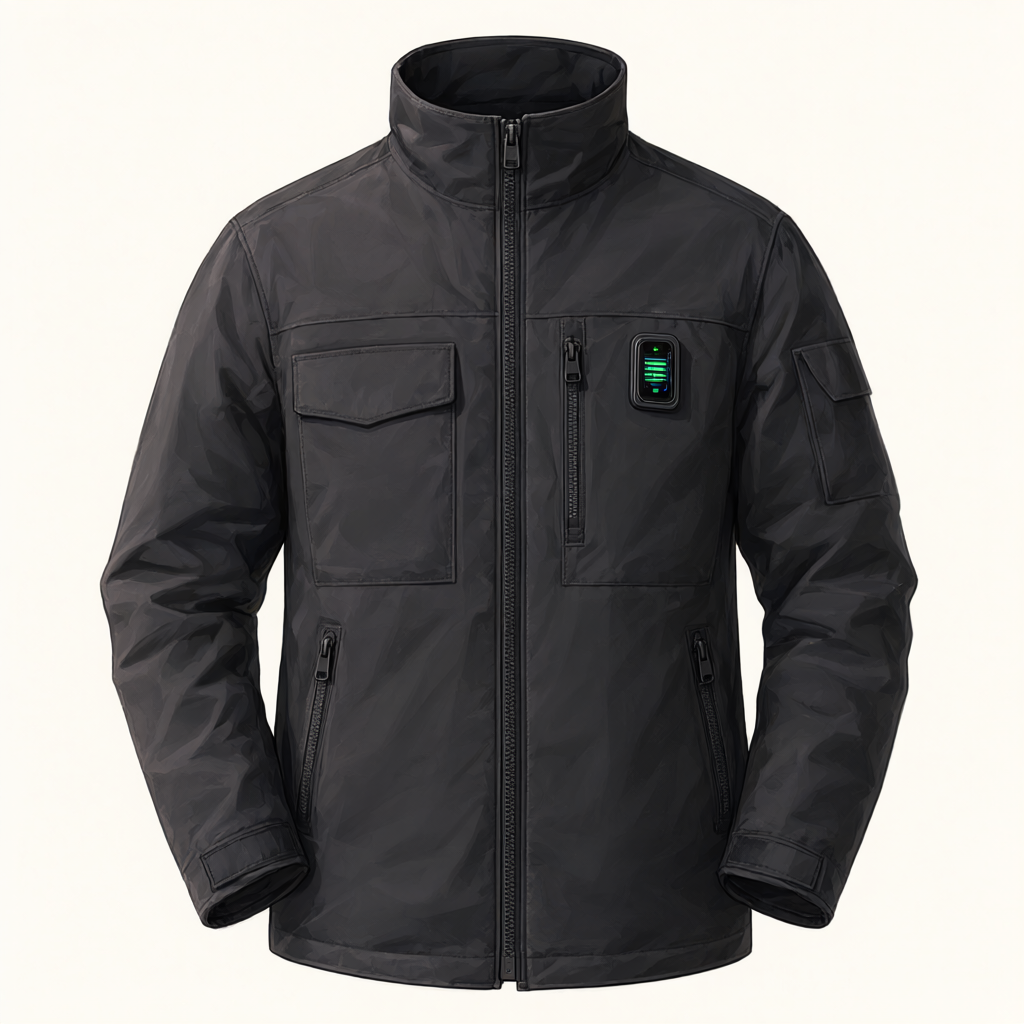
DEWALT’s answer is the DCHJ060C1 soft shell kit, and its headline feature is battery flexibility. The included DCB091 USB power source accepts both 20V MAX and 12V MAX batteries, and the battery pocket expands to fit larger 20V MAX XR packs when you want more runtime. That matters because the headline runtime number, up to 7.5 hours on low with the compact 20V MAX battery, is the shortest of the two jackets, and stepping up to a bigger pack is the honest fix.
The heat layout is the DeWalt’s strongest card: four core zones covering the left and right chest, the mid-back, and the collar, run through an LED controller with three temperature settings plus a pre-heat function. That collar zone is the one piece of real estate Milwaukee’s jacket does not heat, and anyone who works with their neck exposed in wind will notice the difference. The kit ships complete, with the jacket, the 20V/12V MAX USB power source, a DCB201 20V MAX battery, and the DCB101 charger, so there is no separate battery purchase to budget for.
The shell is a water-resistant polyester soft shell, and the USB adapter doubles as a phone charger with two USB ports and a battery fuel gauge. On the warranty, DEWALT lists a 1-year limited warranty on the jacket and its standard 3-year limited warranty on the USB charger and power source. At the retailers we checked on September 24, 2026, the kit lists around $260.99 at a stocking supplier, which makes it the pricier kit of the two as of this writing.
DEWALT: pros
- Four heating zones including the collar, the most coverage of the two jackets.
- Pre-heat function plus three temperature settings on the LED controller.
- Kit ships complete: battery, charger, and the dual-voltage USB power source.
- The USB power source doubles as a phone charger with two ports and a fuel gauge.
- Battery pocket expands for larger 20V MAX XR packs when you want more runtime.
DEWALT: cons
- Shortest claimed runtime of the two: 7.5 hours on low with the compact battery.
- Priciest kit of the two at about $260.99 as checked, roughly $60 over the Milwaukee kit.
- The manufacturer does not specify machine-wash safety, so follow the care tag.
Head-to-Head: Heat Performance
On paper the two jackets take different approaches to the same problem. Milwaukee puts three zones on the chest, back, and front pockets, with a fast heat-up claim and zone control that lets you run the core or the pockets independently. DeWalt puts four zones on the chest, mid-back, and collar, with a pre-heat function that blasts full power briefly before settling into your chosen setting.
The honest read: Milwaukee’s heated pockets are the better hand-warming solution, and its 3X faster heat-up claim targets the morning job-site complaint of waiting for warmth. DeWalt’s heated collar is the better neck solution, and four zones beat three for total coverage. Neither manufacturer publishes actual temperature figures for these two jackets, so any claim about one running hotter than the other would be guesswork. Treat zone placement, not zone count, as the real differentiator: pockets versus collar.
Match the layout to where you actually lose heat on your job. Wind and overhead work find the neck first, which is where the DeWalt’s collar zone earns its keep on open sites. Gloved hands stuffed into pockets warm fastest under Milwaukee’s pocket zones. And Milwaukee’s independent zone control doubles as a battery strategy: on a milder day, running the pockets alone instead of the full garment heats less area and should stretch the charge further, which is worth remembering before you spend up on a bigger pack.
The controllers differ in philosophy too. Milwaukee’s easy-touch LED controller offers three heat settings with independent zone control, so you can run the core zones, the pockets, or both depending on what is cold. DeWalt’s LED controller also offers three temperature settings but adds a pre-heat function that blasts full power briefly to take the chill off before settling into your chosen setting. If you hate the first ten minutes of the morning, DeWalt’s pre-heat and Milwaukee’s Quick-Heat are both aimed squarely at that complaint.
One more note for shoppers who do not want workwear styling: DEWALT also sells a newer DCHJ093 lightweight puffer heated jacket kit, first listed in October 2025, with three heating zones and a 20V battery, charger, and power adapter in the box. It is the lighter, more packable alternative inside the same 20V MAX ecosystem.
Head-to-Head: Battery Life and Ecosystem
This is where the comparison is actually decided, and where most competing articles get lazy. The runtime numbers are not directly comparable because they are tied to different batteries: Milwaukee claims up to 12 hours on low with a 3.0Ah M12 pack, while DEWALT claims up to 7.5 hours on low with the compact 20V MAX pack. DeWalt’s figure climbs with bigger XR batteries, and Milwaukee’s figure drops if you run a smaller pack, so read both as starting points, not guarantees.
The ecosystem math is the part that actually matters. Both jackets run on the same batteries as their brands’ tools, and neither brand’s battery works in the other’s jacket, so buying into the wrong ecosystem means buying a second battery system. If you already own M12 tools, the Milwaukee jacket costs you nothing in new batteries: any M12 REDLITHIUM pack you own powers it. If you already own 20V MAX tools, the DeWalt jacket slots into batteries and chargers you already have, and its dual-voltage adapter even accepts 12V MAX packs. If you own neither, Milwaukee’s kit is the cheaper entry point at $199 with the 3.0Ah battery included, versus about $260.99 for the DeWalt kit.
One more layer to the lock-in math: the jacket is the cheapest thing you will ever buy in the platform. The jacket itself runs a couple hundred dollars, but the drills, saws, and lights that share its batteries add up to thousands over the years, along with a second charger and storage for every extra battery line you adopt. So for buyers starting from zero, the honest question is not which jacket spec sheet wins. It is which cordless tool lineup you want to live inside for the next decade, because the jacket is a down payment on that commitment either way.
For a deeper dive on what the voltages actually mean in practice, see our 7.4V vs 12V vs 20V guide and the heated jacket battery buying guide for spare-battery and compatibility advice.
Head-to-Head: Fit, Build Quality, and Value
Milwaukee’s TOUGHSHELL is the tougher garment on paper: stretch polyester with a DWR finish, a workwear cut with dropped shoulder seams for range of motion, and the only jacket of the two the manufacturer lists as washer and dryer safe. DeWalt’s soft shell is a water-resistant polyester with a fleece lining, adjustable cuffs and waist, and a more classic work-jacket look.
The cleaning difference is worth pausing on. Heated workwear gets filthy, and Milwaukee’s explicit washer and dryer safe rating removes the guesswork. DeWalt’s published specs do not state machine-wash safety, so owners should follow the care tag rather than assume. That is a genuine practical edge for Milwaukee, not a marketing one.
On value, the arithmetic favors Milwaukee for new buyers: a complete kit with battery and charger at $199 versus about $260.99 for the DeWalt kit. The DeWalt kit counters with more included in the box at the USB level, the two-port phone charger with fuel gauge, and the four-zone layout with the collar. Neither is a bad buy. They are priced for different starting positions.
What to Consider Before You Pick a Platform
Both jackets heat well on paper. The differences that actually affect your purchase are batteries, runtime, zone placement, kit contents, and care. Work through these five questions before you buy.
Which battery system do you already own?
Every price below hangs on this answer. The jackets are proprietary to their battery platforms, and using one brand’s battery in the other’s jacket is not recommended. If your shop runs on M12 REDLITHIUM packs, the Milwaukee jacket costs you nothing in new batteries, and any M12 pack you own powers it. If your shop runs on 20V MAX, the DeWalt jacket slots into the batteries and chargers you already have, and its dual-voltage adapter even accepts 12V MAX packs. Settle this question before you compare anything else.
How many hours of heat do you actually need?
Read both runtime claims as starting points tied to specific batteries, not guarantees, then map them to your shift. Milwaukee claims up to 12 hours on low with the 3.0Ah M12 pack, which covers a full workday on paper, but the claimed 3 hours on high covers only a morning, so days on high heat need a second pack rotating through the charger. DeWalt claims up to 7.5 hours on low with the compact 20V MAX battery, which barely covers a full shift and leaves no margin, so stepping up to an XR pack in the expandable pocket is the realistic move for long days rather than an optional upgrade. Notice the pattern both brands are really selling: Milwaukee’s independent zone control and DeWalt’s pre-heat-then-settle controller both assume you will dial the heat to the zones and settings you actually need instead of running full power all day. Either way, budget for a spare battery if you run high heat for hours at a stretch.
Heated pockets or a heated collar?
Zone placement is the real differentiator between these two, not zone count. Milwaukee heats the chest, back, and front pockets, with independent zone control for the core and the pockets, so your hands warm up when you tuck them in. DeWalt heats the left and right chest, the mid-back, and the collar, so your neck stays covered when wind gets under your chin. Neither manufacturer publishes temperature figures, so do not shop on zone counts alone. Pick the one that heats the spot that gets cold on you first.
Jacket-only or a full kit?
Check the listing title before you click buy. Milwaukee sells the TOUGHSHELL as the M100G-20 jacket-only version for owners who already have M12 packs, and as a kit with a 3.0Ah battery and charger for about $199. The DeWalt DCHJ060C1 ships as a kit with the jacket, the 20V/12V MAX USB power source, a 20V MAX battery, and the charger, listed around $260.99. If you already own batteries, the jacket-only route saves money. If you are starting from zero, only the kit listings give you heat on day one.
How will you clean it?
The care rule is simple: always remove the battery and power source before washing any heated jacket, and follow the care tag when the manufacturer stays silent, as DeWalt does here. Milwaukee’s washer-and-dryer-safe rating removes the guesswork entirely.
Which Should You Buy?
- Buy the Milwaukee if you already own M12 batteries. Zero new batteries to buy, one charger for tools and apparel, and the longest claimed runtime of the two.
- Buy the DEWALT if you already own 20V MAX batteries. The dual-voltage adapter accepts your 20V and 12V MAX packs, the kit ships complete, and the heated collar covers the spot Milwaukee misses.
- Buy the Milwaukee if you are starting from zero. The $199 kit undercuts the DeWalt kit by roughly $60 as checked, the jacket is washer and dryer safe, and the 12-hour claimed runtime on low is the stronger number.
- Buy the DEWALT if you want the most heat coverage. Four zones including the collar, plus the pre-heat function, make it the pick for buyers who prioritize warmth placement over runtime.
- Buy the DEWALT if you want a women’s-specific cut. DEWALT sells a women’s heated hooded jacket line (the DCHJ066), while Milwaukee’s women’s heated option centers on the M12 AXIS jacket.
- Skip both if you do not want a tool-brand battery system at all. Dedicated heated-apparel brands like Ororo run on slim 7.4V packs with longer claimed runtimes and lighter shells. Our how to choose a heated jacket guide walks through that decision.
FAQ
Can I use a Milwaukee battery in a DeWalt heated jacket?
No. Both brands design their battery systems as proprietary ecosystems, and using a Milwaukee battery in a DeWalt jacket is not recommended by the manufacturers. Stick with the battery platform the jacket was built for.
Does the Milwaukee M12 heated jacket come with a battery?
It depends on the listing. The kit version ships with a 3.0Ah battery and charger included, listed at $199. The jacket-only version skips the battery for owners who already have M12 packs, and lists around $169 to $175 depending on size and color. Check the listing title before you buy so you know which one you are getting.
How long does the DeWalt heated jacket battery last?
DEWALT claims up to 7.5 hours on low with the compact 20V MAX battery included in the kit. Real runtime depends on the heat setting and the battery you use: larger 20V MAX XR packs fit the expandable battery pocket and extend that figure, while running on high shortens it considerably.
Can you wash a Milwaukee or DeWalt heated jacket?
Milwaukee lists its TOUGHSHELL jacket as washer and dryer safe. DeWalt’s published specs do not confirm machine washing, so follow the care tag on the garment. With any heated jacket, remove the battery and power source before washing.
Which battery platform is better for heated gear, M12 or 20V MAX?
Neither is universally better. M12 packs are smaller and lighter, which suits a jacket you wear all day, and Milwaukee’s 12-hour claimed runtime on low leads the pair. The 20V MAX platform is broader across tools and accepts bigger high-capacity packs, and DeWalt’s dual-voltage adapter even takes 12V MAX batteries. The right answer is the platform you already own: that is the entire economic logic of tool-brand heated gear.
Final Verdict
- Best for most buyers: Milwaukee M12 Heated TOUGHSHELL Jacket. Longest claimed runtime, washer and dryer safe, quick heat-up, and the cheapest kit as checked.
- Best for DeWalt owners: DEWALT DCHJ060C1 Heated Jacket Kit. Ships complete with battery and charger, heats four zones including the collar, and slots into the 20V MAX batteries you already own.
- Best for maximum coverage: DEWALT DCHJ060C1 again, for the collar zone and pre-heat function. Best for hand warmth: the Milwaukee, for the heated front pockets.
If you own M12 tools, the decision is already made: buy the Milwaukee and put batteries you own to work. If you own 20V MAX tools, buy the DeWalt and do the same. If you own neither, Milwaukee wins this head-to-head on runtime claims, washability, and kit price. Either way, stop shopping for a jacket and start shopping for the battery system, because the platform is the purchase.
The specs are closer than the economics, and that is the real lesson of this comparison. DeWalt’s four-zone coverage and complete kit are genuine advantages, and Milwaukee’s runtime lead and wash rating are genuine advantages, yet neither spec advantage is decisive on its own. What decides it is the battery system behind the jacket, because that system is the purchase that compounds for years while the jacket itself just keeps you warm. Buy the jacket for the platform you already own. If you own neither, buy the jacket for the platform you want to live in, and let kit price and runtime claims be the tiebreakers rather than the deciders.
Related: The 10 Best Heated Jackets of 2026, How to Choose a Heated Jacket, Best Heated Jackets for Work, Best Heated Gloves.